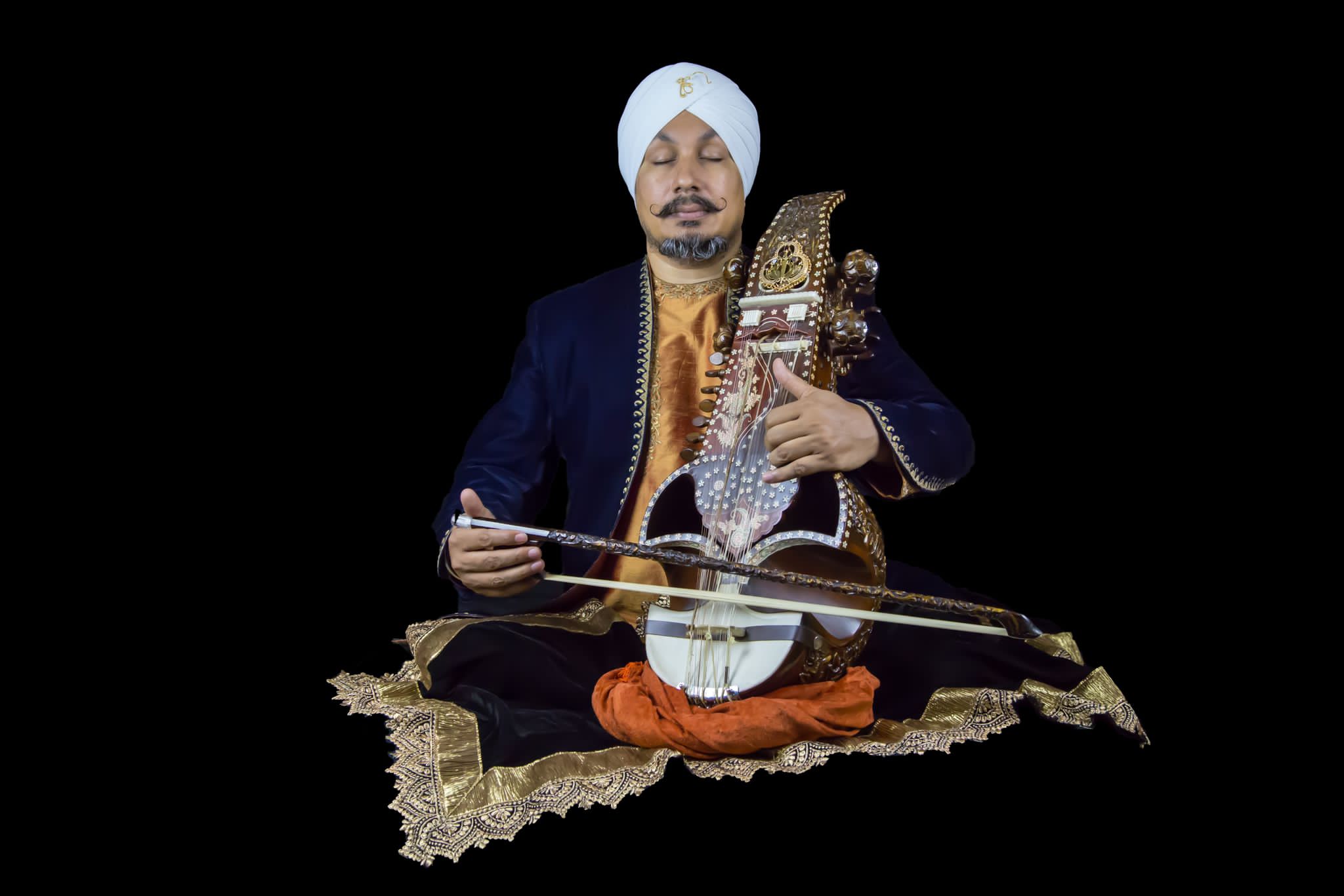

The Naad Yoga Council is preparing a new online home. We are creating a place that reflects the Council’s commitment to the living tradition of Naad Yoga, its community, and the work it continues to carry forward.
We look forward to welcoming you.
Our doors open soon
Until then, we’d be pleased to hear from you.
Those who give their time, skill, and care to the Council’s work — through hospitality, events, writing, research, administration, or creative practice — carry the tradition forward as much as those who practice or teach it.
Council Recognition is the Council’s way of acknowledging that contribution: a certificate marking the time and care someone has given, offered after a full cycle of contribution — a season, an event, a completed project.
Those who give their time, skill, and care to the Council’s work — through hospitality, events, writing, research, administration, or creative practice — carry the tradition forward as much as those who practice or teach it.
Council Recognition is the Council’s way of acknowledging that contribution: a certificate marking the time and care someone has given, offered after a full cycle of contribution — supporting a full Dukh Bhanjan, seeing a project through from start to finish, or a season of ongoing help.
This is different from Council Honours, which is bestowed for sustained, distinguished dedication over many years. Recognition is simpler and more immediate — a thank-you extended to any Council Contributor who sees a contribution through.
By joining the Naad Yoga Council (NYC) e.V., I agree to the following:
Governance. Membership is governed by the Articles of Association of Naad Yoga Council (NYC) e.V., a registered non-profit association (Register of Associations VR 3792, Siegburg Local Court, Germany).
Contribution. I have selected a pathway of support (Steward, Member, Keeper, Patron, or Benefactor) at the rate shown, or entered into a Legacy Circle arrangement by separate agreement. My contribution renews automatically each year until I choose to end my membership.
Financial hardship. If cost is ever a barrier, I may contact the Council to adjust my contribution. Financial circumstances will never determine whether someone belongs.
Sponsorship. If I have chosen to sponsor a membership, my contribution supports another person’s belonging in addition to my own.
Resignation. I may end my membership at the close of any calendar year, with three months’ written notice to the Executive Board.
Data protection. My personal data is processed for membership administration and billing, in accordance with Art. 13 GDPR. Details are in our Data Protection Policy.
Neutrality. The Council is politically, ethnically, and religiously neutral.
I confirm I have read and agree to these terms and to the full Articles of Association.
§ 1 Name, Seat
(1) The association named Naad Yoga Council (NYC) e.V. is to be registered in the responsible association register.
(2) It henceforth has its seat in Lohmar. The articles of association were established on 12 November 2011; the association was entered into the register of associations on 1 March 2012.
(3) The association is politically, ethnically and religiously neutral.
(4) The financial year is the calendar year.
(5) The association pursues exclusively and immediately non-profit and selfless, non-economic purposes in accordance with the “Steuerbegünstigte Zwecke” (tax-privileged purposes) section of the German Fiscal Code.
§ 2 Purpose of the Association
(1) For the sake of promoting science and research, the teachings of Naad Yoga (Yoga of Sound) as taught by Professor Surinder Singh in the tradition of Siri Guru Granth Sahib should be preserved and spread. Naad Yoga is an ancient Indian science using sound and music for physical, mental and spiritual balance, practicable by all people regardless of culture, language, religion, age and gender, and is non-religious.
(2) The association supports careful and respectful interaction between all people, cultures and religions.
(3) It supports the international network of students and practitioners of Naad Yoga worldwide, enhancing mutual understanding and intercultural tolerance.
(4) The association works on research and dissemination of Naad Yoga for the betterment of psychological and physical health, for the sake of public health care.
(5) A long-term goal is the foundation of a center open to all individuals to learn Naad Yoga and experience relaxation, healing and encouragement.
§ 3 Tasks
The purpose is realised particularly through:
(1) Organisation of courses, workshops, seminars, talks, trainings, continuing education, retreats and educational concerts by Professor Surinder Singh and members; support of Raj Academy’s training programs.
(2) Supporting members in realising initiatives aligned with the association’s purpose.
(3) Supporting the formation and extension of centres where Naad Yoga is taught.
(4) Quality assurance of events using Professor Surinder Singh’s material, via the Naad Yoga Council seal.
(5) Supporting publication of articles, papers and case studies related to Naad Yoga.
(6) Building a network of practitioners and connections with international institutions.
(7) Supporting media projects (sound and video recordings) to raise public awareness.
(8) Creating a platform for advanced training and exchange between members.
(9) Special support for prisoners and ex-prisoners, to reduce aggressive and emotional tensions.
(10) Special support for work with senior citizens and hospital projects.
§ 4 Use of Funds
(1) Resources are raised through membership fees, donations, grants, course fees and other grants; the association intends to work with trusts and foundations.
(2) Contributions are made by members; amount and due date are set by the general assembly. Honorary members are exempt.
(3) Funds may only be used for statutory purposes; members receive no endowments from association funds.
(4) No person may be favoured by expenses inconsistent with the association’s purpose or by disproportionately high remuneration.
(5) Volunteers can only be reimbursed for proven expenses.
§ 5 Organs of the Association
(1) The executive board (2) The general assembly (3) The advisory board
§ 6 The Executive Board
(1) Following § 26 BGB, the board consists of up to 3 members: chairperson, second chairperson, recording clerk.
(2) Tasks include: preparing and convoking the General Assembly, executing its resolutions, administering assets, preparing annual/cash reports, resolving on member admission/exclusion, and all business not assigned elsewhere.
(3) The board leads and represents the association legally and out-of-court; each member may represent individually. Business may be transferred to a manager who is a member.
(4) Board members may receive lump-sum payment for work/time; the general assembly can approve adequate payment, scaled to the non-profit purpose.
§ 7 Period of Office for the Executive Board
Elected for 2 years by the general assembly; remain in office until re-election. A departing member is replaced by a substitute chosen by the board for the remaining term.
§ 8 Resolutions by the Executive Board
(1) Resolutions are generally passed at board meetings (at least annually, recorded in protocol); decisions may also be made by conference call or email. Invitations issued at least two weeks in advance; no agenda announcement required.
(2) Quorum: at least two members present/connected; majority vote; chairperson’s vote breaks ties.
(3) Members may authorise each other for representation in writing, defining voting behaviour.
§ 9 Membership and the General Assembly
(1) Any natural or legal person can become a member.
(2) Regular members pay an annual fee, amount and due date set by the general assembly; the board can allow deductions in justified cases.
(3) The general assembly’s responsibilities include: receiving the annual report and discharging the board; setting the annual fee; electing/dismissing the board and advisory board; resolving changes to the Articles and dissolution; appointing honorary members. Every present member has one vote.
(4) The board decides on written applications; admission completes upon confirmation. New members accept the Articles upon admission.
(5) Membership ends on death, resignation, exclusion by the board, or (for legal entities) dissolution.
(6) Resignation is only possible at year-end, with 3 months’ written notice.
(7) A member may be removed for fee arrears after two reminders, communicated in writing.
(8) A member may be excluded with immediate effect for violating the association’s interests, after an opportunity to respond.
(9) Certain offices may be compensated via employment contract or allowance under § 3 Nr. 26a EStG, decided by the board.
§ 10 Convocation of the General Assembly
(1) At least one regular meeting per year, ideally in the last quarter.
(2) The board invites at least 4 weeks in advance in writing (fax/email permitted), stating the agenda.
(3) The agenda is set by the board.
§ 11 Resolutions by the General Assembly
(1) Led by the chairperson, second chairperson, or another board member; if none present, the assembly chooses a leader.
(2) Minutes kept by the recording clerk or a chosen substitute.
(3) Voting method set by the chair; written voting required if one-third of present members request it.
(4) Meetings may be in person, by phone/video, or fully virtual via password-protected chat room.
(5) May be transmitted audio-visually to members.
(6) Votes may be cast in writing, electronically, or orally in the virtual room, before or during the meeting.
(7) Voting rights may be exercised by authorised member representatives.
(8) Meetings are closed to the public; the chair may admit guests.
(9) Any duly convened assembly has quorum regardless of attendance.
(10) Resolutions generally pass by simple majority (abstentions not counted); Articles changes and dissolution require two-thirds majority. Members may be represented by another authorised member.
(11) If no candidate wins a majority in the first round, a runoff is held between the top candidates.
(12) A signed record of resolutions is kept, noting place, time, chair, clerk, attendance, agenda, and results.
§ 12 Subsequent Requests for the Agenda
(1) Members may apply in writing for additional agenda items up to one week before the meeting.
(2) The chair must supplement the agenda at the meeting’s start.
(3) In-meeting requests to add items require a three-quarters majority to accept.
(4) Articles amendments, dissolution, and board elections/dismissals can only be decided if announced with the agenda in advance.
§ 13 Extraordinary Meetings of the General Assembly
The board may call an extraordinary meeting at any time, and must do so if the association’s interest requires it or 40% of members request it in writing, stating reasons. The same provisions apply as for regular meetings.
§ 14 The Advisory Board
(1) Consists of co-opted members and at least 3 elected members; maximum 7 members total.
(2) Elected by the general assembly for 2 years, individually; up to 3 non-members may be elected as advisors with prior consent.
(3) Remains in office until re-election; a departing member is replaced for the remaining term.
(4) Executive board members cannot serve on the advisory board.
(5) Advises and supports the executive board, carrying out assigned tasks/projects.
(6) Meetings convened at least annually with 4 weeks’ notice; must also convene if 3 advisory members request it. Board members may attend in an advisory capacity.
(7) Resolutions pass by simple majority, recorded and signed.
(8) The advisory board may set its own statutes, subject to general assembly approval.
(9) It also handles duties assigned by the general assembly or executive board not reserved for those organs.
§ 15 Special Representatives
The executive board may appoint special representatives for specific legal transactions within an assigned scope and duration, with the right to attend board meetings for that purpose.
§ 16 Treasurer and Cash Auditor
The general assembly elects a treasurer and cash auditor from voting members for 2-year terms. The treasurer tracks cash transactions and prepares an annual overview. The cash auditor examines all funds, including special funds, and reports findings to the general assembly, informing the board in advance of any objections.
§ 17 Dissolution of the Association and Seizure Rights
(1) Dissolution requires a general assembly resolution with the majority stated above.
(2) Unless decided otherwise, the first and second chairpersons act as joint liquidators; the same applies if the association is dissolved for another reason or loses legal capacity.
(3) On dissolution or loss of tax-privileged status, remaining assets transfer to the city of Lohmar, for exclusive charitable or benevolent use.
(4) Resolutions are recorded by the clerk or a board member and may be challenged only within one month of the meeting.
§ 18 Data Protection
(1) On admission, the association records membership-relevant data (name, address, date of birth, bank account), stored electronically and protected by appropriate technical and organisational measures.
(2) Other information about members or non-members is processed only if useful for the association’s purpose and absent a conflicting legitimate interest.
(3) Every member has the right to: (a) obtain information about their stored data, (b) have inaccurate data corrected, (c) have data blocked where accuracy cannot be determined, (d) have data deleted where storage was inadmissible or no longer necessary, (e) object to processing, (f) receive their data in a structured, machine-readable format.
(4) Organs, employees, and others working for the association are prohibited from unauthorised processing, disclosure, or use of personal data for purposes outside their task — an obligation that continues beyond their departure from the association.